

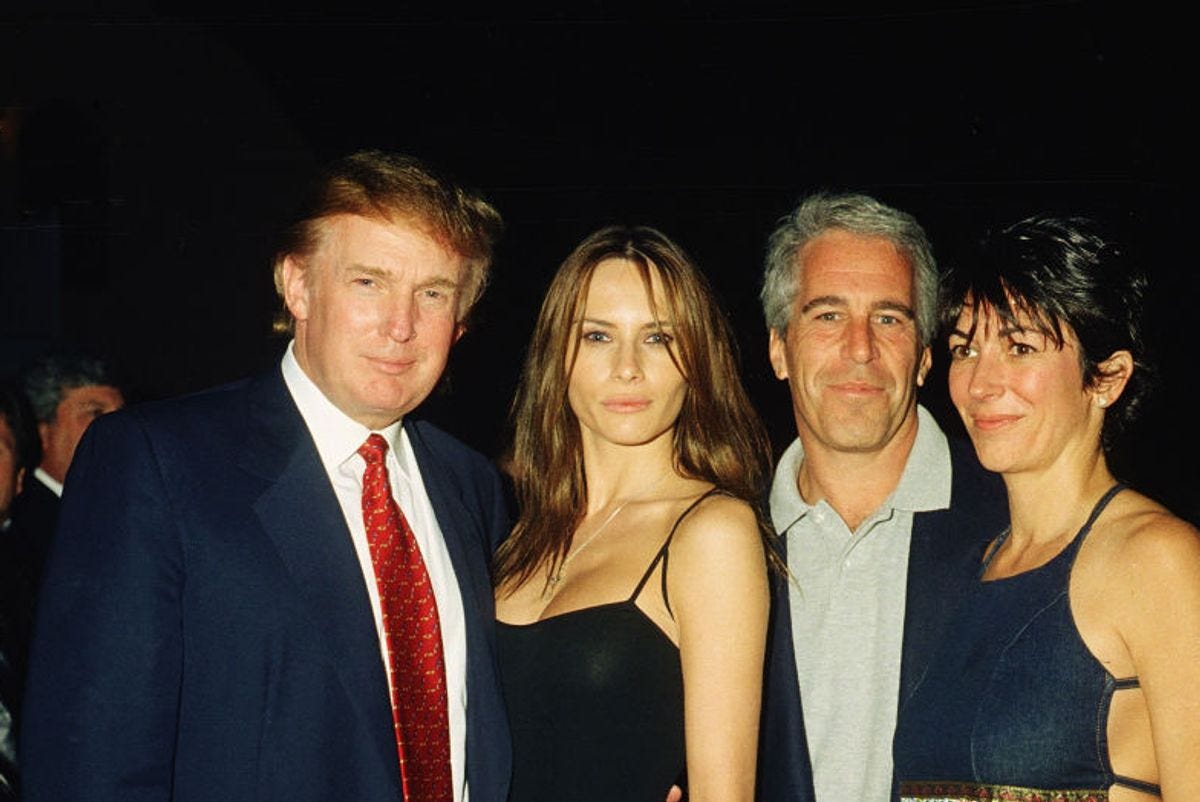
The ongoing release of records linked to the late financier and convicted sex offender Jeffrey Epstein has escalated from a long-running scandal into a damning indictment of how global power protects itself.
What began as an exposure of elite sexual exploitation has now become a test of whether the US - and the wider Western order - can credibly claim moral authority when abuse intersects with wealth, influence, and the highest levels of government.
At the centre of the crisis is Trump, now serving a second term. Trump hasn’t been charged with any crime related to Epstein, and he denies wrongdoing. Yet the issue confronting the US is no longer narrowly legal – it’s systemic. A president whose name appears extensively across the documentary record of one of the most notorious sex-trafficking investigations in modern history now presides over the very institutions tasked with managing public access to that record.
The US Justice Department’s phased publication of Epstein-related material - spanning millions of pages of court filings, internal memoranda, correspondence, and interview summaries - has revealed a depth of proximity between Epstein and global elites that challenges any claim this was merely a story of individual criminality. Searches of the released archive show Trump referenced hundreds of times, with the number increasing as new tranches are indexed.
The references range from social overlap and political context to investigative interest, disputed allegations recorded by law-enforcement officials, and material explicitly labelled as unverified. None amount to criminal findings. Taken together, however, they dismantle the long-standing portrayal of Trump’s relationship with Epstein as marginal or incidental.
What has sharpened the crisis isn’t only what the files contain, but how the American state has responded to them.
In recent Senate testimony, FBI Director Kash Patel asserted that there was “no credible evidence” within the Epstein archive justifying further disclosure. That statement was immediately challenged by senators, legal experts, and survivors’ advocates, who pointed to the extensive body of corroborated material already released and to the fact that credibility determinations are ordinarily made by courts, not by executive fiat. Patel hasn’t conceded his testimony was misleading, but the gap between his assertion and the documentary record fuels accusations the FBI is minimising the significance of evidence for political convenience.
The credibility problem deepened when Attorney-General Pam Bondi, whose department resisted broad disclosure of Epstein-related files until forced by congressional legislation. Bondi justified the resistance on grounds of privacy, national security, and procedural integrity. Whatever the stated intention- was to delay and dilute scrutiny at a moment when the sitting president featured heavily in the material.
Politically, the perception has become entrenched in the Justice Department acted less as an independent guardian of the law than as a buffer protecting executive power.
The convergence of interests has produced an unprecedented conflict of trust. A president repeatedly documented in the files of a major criminal investigation sits atop an executive branch that sought to slow or shape their release. In most democratic systems, such overlap would trigger mandatory recusal or the appointment of an external authority. In the US, it has instead exposed how dependent accountability is on voluntary restraint - and how quickly it collapses when that restraint disappears.
The constitutional bar for removing a president is intentionally high, limited to impeachment and conviction for “high Crimes and Misdemeanours.” That standard has never been confined to statutory crimes. Historically, it’s encompassed abuse of power, obstruction, and conduct fundamentally incompatible with public trust. By that measure, the Epstein affair raises unresolved deeply troubling questions. If executive authority was used, even indirectly, to influence disclosure in a matter where the president is personally implicated, the constitutional implications are severe. Even the appearance of self-protection corrodes democratic legitimacy.
There’s also a national-security dimension that reaches beyond US borders. Epstein was investigated as a transnational operator whose network intersected with intelligence, finance, and political elites. In intelligence practice, vulnerability doesn’t require proof of guilt. It requires the belief leverage might exist. A president whose name is mired in such archives, and whose administration has resisted disclosure, becomes a point of concern not only domestically but internationally, weakening America’s standing and credibility.
Globally, the contrast is stark. In the UK Prince Andrew was stripped of royal patronages and public roles following scrutiny of his Epstein ties. In parts of Europe, senior officials have resigned or faced parliamentary inquiries after their names surfaced in released material. In the US, however, the response around its sitting president has been marked by procedural deflection and partisan paralysis. Congressional hearings have focused on bureaucratic mechanics rather than presidential exposure and calls for an independent inquiry have stalled.
For survivors, the disparity confirms a brutal truth - accountability diminishes as power increases. The same structures that failed to protect them now appear designed to insulate those at the top from consequence.
The Epstein files expose a wider moral failure in American society and in the global order it anchors. For decades, credible allegations of sexual exploitation by powerful men were ignored, minimised, or actively buried. Prosecutors compromised. Media institutions hesitated. Political leaders calculated stability mattered more than justice. What’s emerged isn’t merely secrecy, but a culture of accommodation in which abuse is tolerated so long as it doesn’t disrupt power.
So, will culture finally be confronted? A credible response would require a focused congressional inquiry into executive-branch handling of the Epstein disclosures, binding limits on presidential control over investigations in which the president is implicated, and full transparency subject only to narrowly defined survivor protections. Anything less risks confirming the most devastating conclusion of all - even after everything exposed by the Epstein case, global power still protects itself first.
The Epstein archive is no longer just a record of past crimes. It’s an indictment of how authority operates when confronted with its own reflection. Whether the US chooses to confront that reflection honestly will determine not only the fate of Trump’s presidency, but the moral credibility of the system he represents.
Well written Mr. Hazim, as always. The sad truth you revealed is that the higher one is in the political hierarchy in the US, the more they are shielded from accountability and the consequences of their actions. I think the swift response in other nations like the UK and areas like Europe to politicians/public figures involvement in these files is preferable to the deflection, cover up and withholding of truth and accountability here. Once more, the government serves to dissuade and redirect legitimate public interest in these files, much of which have been redacted and withheld still to this day. I can only speculate as to how extensive this corruption and depravity went, and how many people were involved. The truly sad thing is that this further distances the survivors of these depraved injustices from receiving their due rights and justice for what they endured.
Indeed, the US is shielding rather than holding the pedofiles to account. Why are all the files not released? Why can Trump claim: no crime by association, when the rest of the hidden files might contain all the evidence for a lawsuit?